Fujisan's Kyareng

Monday, September 2, 2019

China has no historical, religious and political rights to interfere in Dalai Lamas reincarnation issues

[20/07/2019]

1.       https://tibet.net/2019/07/china-has-no-historical-religious-and-political-rights-to-interfere-in-dalai-lamas-reincarnation-issues/
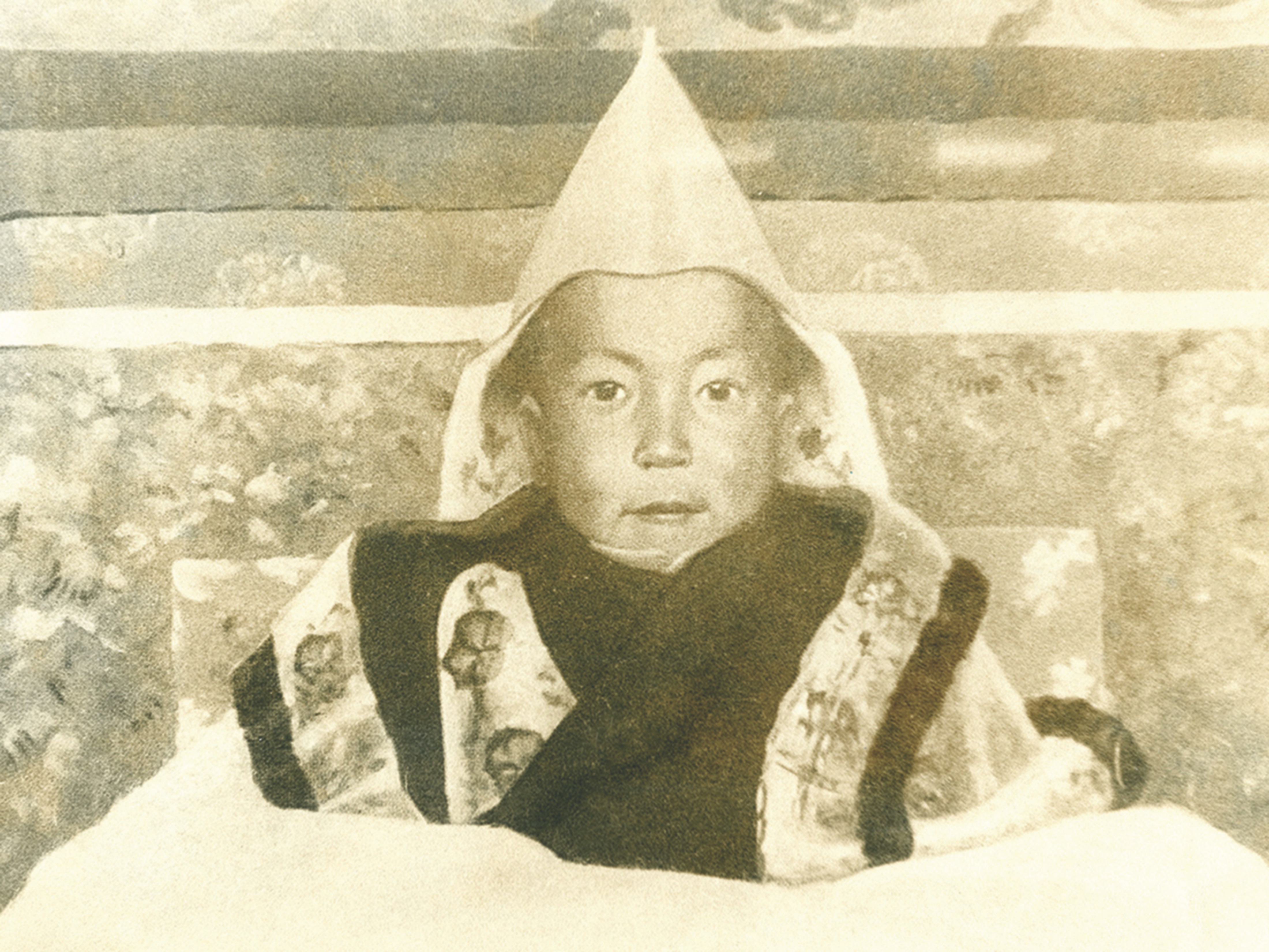

H .H.the 14th Dalai Lama at his enthronement ceremony, February 22, 1940, in Lhasa, Tibet. Photo courtesy of Tibet Museum

Oblivious to the international uproar over the growing repression in Tibet and Uighur region, and Hong Kong unrest, China invited journalists from India this month and condescendingly warned India on the Dalai Lama and Arunachal Pradesh issues. They explicitly conveyed in no less intimidating terms that China will select the 15th Dalai Lama within the country and any interference by India on the issue will not be tolerated!

The inspiration behind the move seems to be from the two dictums in the Sun Tzu’s Art of War tactics. The first, “The further you penetrate into a (enemy’s) country, the greater will be the solidarity of your troops, thus the defenders will not prevail against you.” The second, “Reduce the hostile chiefs by inflicting damage on them; make trouble for them, and keep them constantly engaged; hold specious allurements, and make them rush to any given point.”

Wang Neng Shang, a Vice Minister in TAR and Director General of people’s government information office; Zha Luo, the director of China Tibetology Research Center, the premier Chinese government Tibet policy think tank; and Xiao Jie, assistant fellow at the Institute of Commentary Studies were the three main Chinese officials who interacted and briefed the visiting journalists.

The Chinese officials pointed out two things as important historical criteria for the selection of the Dalai Lama’s reincarnation. First, the selection should be within China based on the 200-year old historical process. Second, it should have the approval of the Chinese Central government. Wang and Xiao further went on to explain that the incumbent 14th Dalai Lama is Dalai Lama because of the Chinese Central government’s recognition.

With due respect to the three learned Chinese officials, we beg to differ, because the fact is otherwise. This is a blatant deliberate attempt by the Chinese leadership to distort historical and religious fact.
When they said “200-year old historical process”, it should be around 1819 AD during the reign of the Qing emperor Jiaqing [r.1796-1820]. However, the history and Institution of the Dalai Lama dates back to more than 500-year, when the first Dalai Lama was born in 1391. It existed much before the emergence of the Qing dynasty [1644-1911] in China. Therefore, the purported indirect assertion that the Qing emperor’s decree governed the reincarnation of the Dalai Lamas is unfounded and baseless. Now, let us have a glimpse of the history of the Dalai Lamas’ reincarnation.

The first Dalai Lama, Gedun Drupa was born in 1391 and his reincarnation, the second Dalai Lama, Gedun Gyatso was born in 1475. The third Dalai Lama, Sonam Gyatso was born in 1543, it was during his time that the Mongolian King Altan Khan conferred the title of Dalai Lama on him as a mark of respect. The fourth Dalai Lama, Yonten Gyatso was born in 1589 in Mongolia. The fifth reincarnation, Lobsang Gyatso [1617-1682], became the spiritual and temporal head of Tibet with the help of Mongolian King Gushri Khan. Then came the sixth in 1682, the seventh in 1708, the eighth Dalai Lama in 1758 and the ninth Dalai Lama in 1805. All the reincarnation selections had been done as per Tibetan religious tradition.

In 1792, during the reign of Manchu emperor Qianglong [r.1736-1795], Tibet requested Manchu’s help to fight the invading Gurkha force. As this was the fourth time the Tibetans asked for the Manchu’s help, the Manchu officials suggested 29-point regulation for the effective administration of Tibet. This was based on the Priest-patron relationship; it has no ruler-subject context. One of the points was to use the Golden Urn method to select reincarnation of Dalai lamas and Panchen Lamas. But except for the selection of the 11th Dalai Lama, this method was never used. For the 10th Dalai Lama, Tsultrim Gyatso, the selection was already done, but to humor the Machus, it was announced that the Golden Urn was used. For the 12th Dalai Lama also, Golden Urn was used as a formality only, as the selection was already confirmed as per Tibetan religious tradition.

So, the Tibetan age-old religious tradition was followed to select the Dalai Lamas. The 13th and the 14th Dalai Lamas’ reincarnations were also selected as per Tibetan religious tradition. Representatives from the neighboring nations including China came during the enthronement ceremony of the 14th Dalai Lama in 1940. No approval or recognition of any kind from any central government was sought. Wang and Xiao’s assertion, “It was with the central government’s recognition that the Dalai Lama became the 14th Dalai Lama.” is misleading and deplorable.

Therefore, the three Chinese government officials’ statement emphasizing the method of Golden Urn and approval of Chinese central government as mandatory criteria for the recognition of reincarnation of the Dalai Lama is not true and baseless. It is an aggressive and ignominious attempt on the part of the Chinese leadership to distort the ancient religious tradition of Tibet to serve its current political agenda.

To make the historical record straight, it was the Manchu Qing dynasty with whom the Tibetans had been dealing with, China was only a part of the dynasty at that time. If China’s claim on Tibet is based on the Manchu’s relationship with the Tibetans, then Mongols have a better reason to make claim over Tibet.

Sun Yatsen, the father of Chinese republic has stated that the Chinese nation had fallen twice under foreign rule: the first time under the Mongol Yuan dynasty [1271-1368] and the second time under the Manchu Qing dynasty [1644-1911]. So, where is China? What central government are Wang and Xiao talking about? The People’s Republic of China of Communist China came only in October 1949.

His Holiness the Dalai Lama has on numerous occasions explained his stance clearly on the reincarnation. Here is what he has said in September 2011, it is on the official website:

“As I mentioned earlier, reincarnation is a phenomenon which should take place either through the voluntary choice of the concerned person or at least on the strength of his or her karma, merit and prayers. Therefore, the person who reincarnates has sole legitimate authority over where and how he or she takes rebirth and how that reincarnation is to be recognized. It is a reality that no one else can force the person concerned, or manipulate him or her. It is particularly inappropriate for Chinese communists, who explicitly reject even the idea of past and future lives, let alone the concept of reincarnate Tulkus, to meddle in the system of reincarnation and especially the reincarnations of the Dalai Lamas and Panchen Lamas. Such brazen meddling contradicts their own political ideology and reveals their double standards. Should this situation continue in the future, it will be impossible for Tibetans and those who follow the Tibetan Buddhist tradition to acknowledge or accept it.

"When I am about ninety I will consult the high Lamas of the Tibetan Buddhist traditions, the Tibetan public, and other concerned people who follow Tibetan Buddhism, and re-evaluate whether the institution of the Dalai Lama should continue or not. On that basis we will take a decision. If it is decided that the reincarnation of the Dalai Lama should continue and there is a need for the Fifteenth Dalai Lama to be recognized, responsibility for doing so will primarily rest on the concerned officers of the Dalai Lama’s Gaden Phodrang Trust. They should consult the various heads of the Tibetan Buddhist traditions and the reliable oath-bound Dharma Protectors who are linked inseparably to the lineage of the Dalai Lamas. They should seek advice and direction from these concerned beings and carry out the procedures of search and recognition in accordance with past tradition. I shall leave clear written instructions about this. Bear in mind that, apart from the reincarnation recognized through such legitimate methods, no recognition or acceptance should be given to a candidate chosen for political ends by anyone, including those in the People’s Republic of China.”

While the international community respects His Holiness the Dalai Lama as a great spiritual master and accorded Nobel Peace Prize for his contribution in promoting peace and non-violence, the Chinese leadership has condemned him as a devil, a terrorist, a separatist, and a wolf in a sheep’s skin. The important question here is: then why are they so desperate to have the devil, terrorist, separatist and the wolf to be reborn?

The concept of reincarnation is based on the Buddhist and Hindu belief of existence of past and future lives. Chinese communist leadership should first learn and accept the existence of past and future lives before meddling in the reincarnation of Tibetan lamas. China’s State Religious Affairs Bureau Order No. 5 should be withdrawn. Buddhists and devotees around the world including those in China will not tolerate this communist blasphemy!

Therefore, the leaders of the free world and the advocates of freedom, justice and democracy around the globe should uphold the words of His Holiness the Dalai Lama as final in his reincarnation issue, and collectively urge the Chinese leadership to refrain from any act of sacrilege against the highest order of Tibetan Buddhism. The fact is that communist China has no historical, religious and political rights to select the Dalai Lamas.

Reference:


Why Chinese leadership is avoiding talks with the Tibetan representatives

[05/07/2019]

1.       https://tibet.net/2019/07/why-chinese-leadership-is-avoiding-talks-with-the-tibetan-representatives/


Zhu Weiqun, the former Executive Deputy Head of the United Front Work Department of the Communist Party of China (CPC) and the former the Chair of the Ethnic and Religious Affairs Committee, in his recent article in Global times and tirade against His Holiness the Dalai Lama, has said, “It is impossible to hold negotiations with Dalai Lama without conditions.” He criticized Ambassador Terry Branstad for interfering in China’s internal affairs in the same article.

The US Ambassador to China, Terry Branstad, during his visit to Tibet in May, has rightly pointed out to the Chinese authorities the need for substantive dialogue with the Representatives of His Holiness the Dalai Lama without any precondition to resolve Tibet issue.

Zhu was one of the leading members in Sino-Tibetan dialogue 2002-2010, which ended without any concrete result. Now, let us examine what prompted Zhu and the Chinese leadership to insist on preconditions to any further Sino-Tibetan dialogue.  Although Tibet did not achieve any positive result from the nine rounds of talks, it greatly helped China. Firstly, to silence the international uproar over Tibet for sometimes. Secondly, to gain the 2008 Olympics right for Beijing and thirdly and most importantly, to understand what exactly the Tibetans are looking for. 

The first and second point proved advantageous to China. But the third “Genuine autonomy for Tibet” has sent adrenaline rush among the leadership.  As this was within the Chinese constitution, it greatly alarmed them. Refusing it would mean violating the Constitution, this would invite Chinese public and international outcry. So, they insidiously misinterpreted the Tibetans’ Memorandum on Genuine Autonomy as ‘independence in disguise’, ‘demanding greater Tibet’, ‘expulsion of Chinese from Tibet’ etc. and rejected the proposal to negotiate on the same. The Chinese public and many among the leadership in China are also not aware of the contents of the Memorandum.

From the nine rounds of dialogue that have taken place since 2002, China realized that it has no strong legitimate ground to enter into negotiation. They saw that the Tibet was a military occupation, and the 17-point Agreement was a forced one and an excuse to invade Tibet. Now, that the Tibetans are demanding what is already provided in the constitution of the land and the 17-point agreement. So, the truth and justice are in favour of Tibet. A talk without some purported precondition would mean putting itself in a difficult corner. Therefore, the concoction of preconditions. 

Zhu mentions two preconditions: first, “the talks are not between China’s central government and the Tibetan government-in-exile or ‘Central Tibetan Administration,’ nor are ‘Tibetan-Han Talks’ or ‘Tibetan-China Talks’.” Second, the Dalai Lama must accept Tibet and Taiwan as an integral part of China, and stop all separatist and destructive activities.

If we study the contents of these two preconditions, it is obvious that the intention is only to jeopardise and evade any further talks. It demonstrates no serious intention on the part of communist leadership to resolve the issue. Therefore, Zhu Weiqun’s statement “It is impossible to hold negotiations with Dalai Lama without conditions” only betrays the Chinese leadership’s deliberate intention to strangle the talks. Because a free and fair talk or negotiation is bound to be in favour of Tibet.

It also shows that the Chinese leadership is just wishing that Tibet issue fade away with the Dalai Lama. Their wishing away that “there is no so-called Tibet issue” will not make Tibet issue go away. The recent visa issue of a New Zealand-born half Tibetan 14-year-old boy’s episode is indicative of this fact and Chinese vulnerability. 

China considers itself as very strong and invincible because of its military and economic power. His Holiness the Dalai Lama and the Tibetans have nothing but the power of truth with them. This reminds us of David and Goliath story from the Bible, where the Giant despite his strength was defeated by the young boy David. This analogy is succinctly demonstrated from the recent Chinese consulate in New Zealand’s refusal to grant a visa to a New Zealand born half Tibetan 14-year-old boy to play football in China. 

It shows how scared and vulnerable China feels about Tibet and the Tibetans. No doubt, guilty conscience pricks the mind. The message is clear; despite its all military and economic power, a half Tibetan 14-year-old boy is enough to put the totalitarian regime on its toe. Then what about a full grown Tibetan, for that matter, the whole Tibetans! 

Therefore, Zhu Weiqun is wrong in saying that there is no Tibet issue. There is Tibet issue and it will live till the last Tibetan, even to the last half or quarter Tibetan.
Instead of trying to distort history and vilify His Holiness the Dalai Lama, China should accept the reality and give Tibet its rightful autonomy as enshrined in the country’s constitution. 
 
References:
https://tibet.net/2019/05/tibet-us-ambassador-concerned-about-chinese-governments-interference-in-freedom-of-religion/
https://www.nzherald.co.nz/nz/news/article.cfm?c_id=1&objectid=12244492


The 17-point Agreement: what China promised, what it delivered and the future

[
[23/05/2019] https://tibet.net/2019/05/the-17-point-agreement-what-china-promised-what-it-really-delivered-and-the-future-2/

23 May 2019 marks the 68th anniversary of the controversial 17-point agreement between Tibet and China. It is expected that China will once again come out with a gaudy statement to brag the unification of Tibet with the motherland. Let us review some facts about the agreement and urge China to look at the agreement more to resolve the Tibet issue rather than celebrate it as a victory.
The 17-point Agreement is a very important valid historical document which reveals the real nature of Sino-Tibetan relations at that crucial turning point of the Tibetan history of independence. Although forced upon the Tibetan government by communist China, it remains as an important testimony to the fact that Tibet was never a part of China before the agreement.

From the historical perspective, it is very important to assert here that Tibet has never been a part of China anywhere in its pre-1949 history1. Yes, the Mongolian, Nepalese, Chinese and British army did enter Tibet and exercised suzerainty over Tibet at a certain period of Tibetan history. But they came as foreign entities, as invaders or at the request of the Tibetan government, and they left when their missions were accomplished. China cannot claim Tibet because of these historical skirmish incidents. If they did, others can also do the same, for that matter, even Tibet can claim China as a part of Tibet2. These skirmish incidents are natural and in conformity with the political history of almost all the nations around the world.

Communist China has tried to claim Tibet as a part of China under various insubstantial grounds. But like most of its concocted propaganda, the nature of the claims kept changing. First, they claimed Tibet as a part of China since the 7th century Tibetan emperor SrongtsanGampo [Tib: Srongbtsansgampo], when the Tang Princess Wencheng Kungchu became one of the queens of Tibet. Later, the Chinese White Paper3 claimed that they inherited Tibet from the Mongolian Yuan Dynasty in the 14th century, and later from Ming and Qing Dynasties. But these fictitious and deceptive claims intended to distort history were refuted strongly even by the Chinese scholars4.

The fact is that even after the sixty-years of occupation of Tibet, China has not been able to fully win or defeat the Tibetans. When all the historical claims and propaganda failed to justify their occupation of Tibet, China, now has started to harp on “Liberation of Tibet from feudal serfdom” and bringing development in the region.

Many believe that the 17-point agreement with China was the end of Tibetan independence. No, in fact, the 17-point agreement is an important document to prove that Tibet has been an independent nation. The agreement is also a testimony to the fact that China agreed for “one country, two system” formula for Tibet. The nature and the outcome of the agreement also reveal the real imperialistic colour of Chinese communism. Although the agreement was signed under duress, His Holiness the Dalai Lama and the Tibetan government tried their best to accommodate the Chinese demand. When China got confident that the land was fully under the control of its People Liberation Army (PLA), they began to violate the agreement. This is how China under the communist regime works. Hong Kong and Taiwan should learn from this Tibetan experience and be wary of Chinese overtures5.

China first proposed and later imposed the contents of the 17-point agreement on the Tibetans. Tibetans refuted the agreement at first and later tried to accommodate it, but when China violated the agreement which they themselves imposed, Tibetans revolted and refuted it again. But China is celebrating it, herein lies the irony of the agreement!

Now, in order to resolve the Sino-Tibetan issue, His Holiness the Dalai Lama and the Tibetan Administration in exile have proposed solutions in the form of Five point peace plan in 1987, Strasbourg proposal in 1988, and the Memorandum on Genuine Autonomy in 2008. These three proposals can be seen as the three-core Tibetan approach to resolve the Tibet issue. It shares many common elements with the 17-point agreement6, Premier Deng Xiaoping’s statement7 and the Chinese constitution8, the three-core Chinese approach.

The 17-point agreement although signed under duress, it gave China the much-needed excuse to get into Tibet. When His Holiness the Dalai Lama refuted it on April 1959 at Tezpur in India9, the International community came to know the truth about the agreement and China lost the legitimacy to occupy Tibet. So, from the point of International law, China’s occupation of Tibet is illegal10. As a rising super-power and as an important member of the United Nations, China needs to redress this historical faux pas to gain moral and international legitimacy to its claim on Tibet. Through intimidation and brutal occupation, China has achieved all the points mentioned in the 17-points agreement. If China is serious of resolving the Tibet issue, it sincerely needs to brood over those points which it agreed to give to Tibet but never did, they are:

The 3rd point of the agreement: “The Tibetan people have the rights to exercise national regional autonomy under the unified leadership of the Central People’s Government.”

The 4th point: “The central authorities will not alter the existing political system in Tibet. The central authorities also will not alter the established status, functions and powers of the Dalai Lama. Officials of various ranks shall hold office as usual.”

The 7th point: “The religious beliefs, customs and habits of the Tibetan people shall be respected, and lama monasteries shall be protected..”

The 11th point: “The local government of Tibet should carry out reforms of its own accord, and demands for reforms raised by the people shall be settled by means of consultation with the leading personnel of Tibet.”

How harsh the other 13 points may be, China forcefully implemented it. But these 4 points which China has promised Tibet are still not fulfilled, rather China has violated it.

The Memorandum on Genuine Autonomy for the Tibetan people submitted to the Chinese leadership in 2008 should be studied in this context. To what extent the Memorandum has deviated from the three-core Chinese approach. More importantly, it should be studied whether the Memorandum is within the purview of the Chinese constitution or not, if not to what extent it has digressed. These are the common grounds on which Tibet and China need to discuss and negotiate to arrive at a mutually acceptable agreement.

Much to the chagrin of the communist China, the 17-point agreement of 1951 still remains an important document to prove that Tibet was an independent nation before the Chinese invasion. However, as the Tibetans are not seeking separation from China now, the document can play a crucial role in finding a common ground based on the Middle Way Approach of His Holiness the Dalai Lama and the Tibetan Administration in exile. The three-core approaches of Tibet and China could be the Zone of Possible Agreement (ZOPA), where solution to the Tibet issue could be found. A strong will and sincere effort from the Chinese leadership to brood over the ZOPA sphere would be more mutually beneficial rather than harping on the immoral victory it contrived through the 17-point agreement.

23rd May should be a day for the Chinese leadership to look back and see what it promised to the Tibetans and what it really delivered, and how it still could help find a common ground to resolve the Tibet issue.

Footnotes:


TG Arya, https://tibet.net/2019/03/tibet-has-never-been-a-part-of-china-anywhere-in-its-pre-1949-history/
In 763 AD, the Tibetan army of King Trisrong Deutsan captured the Chinese capital Ch’ang-an, the Chinese Emperor fled with his family and a large following. Tsepon Shakabpa, Tibet – A political history, p-39
White paper 1992: Tibet – its ownership and human rights situationhttp://www.china-un.org/eng/gyzg/xizang/t418894.htm
1) Prof Hon Shing Lau, The Political Status of Tibet during Ming Dynasty: An analysis of some historical evidence, City University of Hong Kong, 2)Chinese Voices for Tibet, DIIR, a) Cao Changqing, Independence – the right of Tibetan people, p-80; b) Chen Pokong, Has Tibet belong to China since ancient times?, p-164; c) Zhu Rui, Tibet has not been a part of China since ancient times, p-193  
5 Tang Huiyun, “Why are people in Hong Kong are concerned about the Tibetan problem?”, p-61, Chinese Voices for Tibet, DIIR
6 The point 3rd, 4th, 7th and 11th of the Agreement
7 “Everything is negotiable except the independence of Tibet” – Deng Xiaoping
8 Article-4, “Regional autonomy is practised in areas where people of minority nationalities live in compact communities…….” and Article-2,4 and 11 of Law of the PRC on Regional National Autonomy
9 Facts about the 17-point agreement between Tibet and China, p-137, DIIR, 2001
10 The Legal Status of Tibet – Three Studies by Leading Jurists, p-93, DIIR, 1989

Chinese communist leadership should stop its tirade against His Holiness the Dalai Lama

[25/03/2019] https://tibet.net/2019/03/chinese-communist-leadership-should-stop-its-tirade-against-his-holiness-the-dalai-lama/

Chinese leadership often accuses His Holiness the Dalai Lama as a separatist. But if we study the conduct and speeches of the Chinese leadership and the local party leaders, it is actually the other way round.

In an article in the Global Times, “Beijing will continue to fight against Dalai Lama’s separatist goals”[1], vicious tirade has been directed at His Holiness the Dalai Lama. The Communist Party of China chief of Tibet Autonomous Region, Wu Yingjie, was quoted as saying, “The Dalai Lama has not done a single good thing for Tibet” during the 13th National People’s Congress, and accused His Holiness as a separatist and risk to security in the region.

This kind of calumny and disrespect to His Holiness Dalai Lama by a senior Chinese leader in an official meeting will not sink well in the heart of Tibetans in and outside Tibet. Given the Tibetans’ faith, and the international recognition that His Holiness the Dalai Lama has gained as a prophet of peace and non-violence, Wu Yinglie’s diatribe against His Holiness the Dalai Lama is offensive and it is in very poor taste. It can be seen as a deliberate attempt by the leadership to jeopardize any hope of negotiation and dialogue. It is designed to create dissension between the Tibetan and Chinese peoples.

His Holiness the Dalai Lama has since 1974, pursued a policy of middle way approach in resolving the Tibetan issue with the Chinese government. This policy, later, became popular as the Middle-Way Policy across the globe. It was endorsed by Tibetan Parliament-in-exile and adopted by Kashag (the Tibetan cabinet in exile) as its principle policy to resolve the Sino-Tibetan issue.

The Memorandum on genuine autonomy for the Tibetan People was submitted to the Chinese leadership during the 8th round of Sino-Tibetan Dialog in 2008. The gist of the Middle-Way Policy is that Tibetans will not seek separation from China, it will remain in association with the People’s Republic of China (PRC). But China should stop its repressive policy in Tibet, and give Tibetans freedom to practice their religion, language, and culture as enshrined in the Chinese constitution on regional autonomy[2].

To quote the translated original text of the Memorandum, “The essence of the Middle Way Approach is to secure genuine autonomy for the Tibetan people within the scope of the Constitution of the PRC. This is of mutual benefit and based on the long-term interest of both the Tibetan and Chinese peoples. We remain firmly committed not to seek separation or independence. We are seeking a solution to the Tibetan problem through autonomy, which is compatible with the principles of autonomy in the Constitution of the People’s Republic of China.”[3]

The Memorandum explained the aspirations and basic needs of Tibetans, and all these demands are found in compliance with the Law on Regional National Autonomy (LRNA)[4]. So, His Holiness the Dalai Lama and the Tibetan Administration in exile are not seeking separation. The Memorandum has adjusted the Tibetan aspirations and basic needs along the LRNA, and it is within the purview of the Chinese Constitution.

Chinese scholars, writers, media personalities and the general public who have come across this Memorandum, had welcomed and appreciated this genuine conciliatory gesture from the Tibetan side. Many visited His Holiness the Dalai Lama and affirmed their support to this Middle Way Policy. Despite the Chinese government censorship, more than 900 articles appeared from Chinese scholars in support of this Policy.[1] Leaders and International communities have also supported this Policy of mutual understanding and benefit.

Unfortunately, the Chinese leadership spurned this sincere gesture from the Tibetan side, and continue its diatribe against His Holiness the Dalai Lama as a separatist. By misreading the Tibetan Memorandum and criticizing His Holiness the Dalai Lama, the Chinese leadership is deliberately trying to create a rift between the Chinese and Tibetan masses.

While the Tibetan Administration-in-exile has been doing its best to create a harmonious atmosphere to resolve the issue, the Chinese leadership is dismantling all avenues of peace and dialogue. So, who is the separatist?

As to Wu Yingjie’s assertion “The Dalai Lama has not done a single good thing for Tibet”, since the signing of a 17-point agreement under duress, His Holiness did his best to accommodate the Chinese dictates. Wu should note that the Tibetan religion, culture, language and identity, which the communist regime tried to erase in all these 60 years of their rule in Tibet, is living and flourishing in exile because of the effort by His Holiness the Dalai Lama. Despite the Chinese despotic and brutal rule, Tibetans in Tibet stood by the principle of non-violence struggle advocated by His Holiness the Dalai Lama.

What China destroyed in Tibet, Tibetans have rebuilt in exile. China has denied its citizens of democracy and human rights. Tibetans have created a healthy democratic setup where everyone enjoys equal rights. If the communist leadership is serious about resolving Tibetan issue, it should first stop its local leaders from making such baseless criticism against His Holiness the Dalai Lama. Under the PLA’s guns and threat, Tibetans may keep quiet, but deep in their heart, it will only fortify their belief that China is, after all, a Tendra [Tib: bsTan-dgra], an enemy of the faith.

*******************
[1] Middle Way Policy and All Related Documents, p-12, DIIR, India
[1] http://www.globaltimes.cn/content/1142114.shtml
[2] Constitution of PRC, Article 4: https://www.wipo.int/edocs/lexdocs/laws/en/cn/cn147en.pdf
[3] Middle Way Policy and All Related Documents, p-20, DIIR, India
[4] Law on Regional National Autonomy: http://www.china.org.cn/english/government/207138.htm
[5] Middle Way Policy and All Related Documents, p-12, DIIR, India

Tibet has never been a part of China in its pre-1949 history

 [20/03/2019] https://tibet.net/2019/03/tibet-has-never-been-a-part-of-china-anywhere-in-its-pre-1949-history/

The Chinese communist mouthpiece, the Global Times, recently carried an article, “Western media report on Tibet full of bias” by Xu Hailin. But the irony of the article is that, while it criticized western media of ignorance and misleading, the first paragraph of the article itself reflected gross ignorance and intention to mislead on the part of the author.

It says, “Tibet has been an inalienable part of China since ancient times. This is the precondition for anyone to talk about the Tibet question. Without it, any criticism is self-serving entertainment that can never have a correct and comprehensive understanding of what has been happening in Tibet.”1
Tibet has been an independent nation since ancient time, and it has never been a part of China anywhere in its history. It was only in 1949, that the communist China forcefully occupied Tibet, and unleashed its draconian rule in the region. If the statehood of Tibet is to be set as a precondition to talk about Tibet, then the communist regime should go hiding behind the bushes of the Great walls.

Since the time of the first King of Tibet, Nyatri Tsanpo [around 400 BCE]2, some 43 kings had ruled Tibet till the middle of 9th century CE. It was followed by Sakya Lamas, Phagdrupas, Rinpungs, Tsangpas and the Dalai Lamas till 1959, the year when China took full control over Tibet. In all these years, Tibet had maintained varied relationships of war, peace, and accommodation with its immediate neighbors: India, China, Mongolia and Nepal. How much China may want to distort, the fact is as early as 7th century, Tang Emperor Taitsung had to kowtow before the might of King Srongtsan Gampo and offer his daughter Princess Wencheng Kungchu’s hand to the Tibetan king.

In 763 CE, during the reign of King Trisrong Deutsan, Tibetan troops captured the Chinese capital Changan, present day Xian, and installed the friendly prince Chengchung as the new Emperor. During King Trirelpachen’s period, a peace treaty was concluded between Tibet and China in 821 CE in which it was proclaimed, “Tibetans shall be happy in Tibet, and Chinese in China. Both shall not intrude into other’s territory”. These events were inscribed on the stone pillars [Tib: rdo ring] erected in the Chinese city of Changan, Tibetan capital Lhasa and the border Gungu Meru. The pillars in Lhasa stand witness to these historical facts.

Later, in the 13th century, like some other countries, both Tibet and China also came under the influence of the Mongolian empire. But China was ruled directly by Mongol emperors under Yuan dynasty [1279-1368]. Tibet enjoyed great autonomy under Priest-patron [Tib: chos yon] relationship between the Mongol Emperors and the Sakya Lamas. However, Tibet later shook off the Mongolian influence in 1350, while China became free only in 1368. Therefore, the Chinese assertion that China inherited Tibet from Mongolian Yuan dynasty does not hold any ground.

During the reign of the Dalai Lamas starting from the mid 17th century, Mongol, China and Nepal influenced Tibet occasionally, but nothing amounted to the loss of Tibetan independence. When Tibet realized the “Great Game” of British and Russian Empire, His Holiness the 13th Dalai Lama declared Tibetan independence on 13th February 1913.

Chinese communist leadership and its scholars should note that no Chinese official documents prior to the founding of the People’s Republic of China show Tibet as a part of China3. Prof Han Shiang Lau, an expert on Chinese history, has in his presentations, stated that old officials documents of Ming [1368 – 1644] and Qing [1644 – 1912] dynasties have recorded Tibet as a foreign entity along with other foreign countries. “Tibet was never a part of China before 1949”4, he clarified to the large audience.   

Therefore, Xu Hailin’s assertion that Tibet has been an inalienable part of China since ancient times is wrong and devoid of any historical facts.

Now, coming to the “liberation of 1 million serfs, promotion of democracy, human rights, Tibetan language” etc. by the communist regime, if these were all true, why this restriction to visit Tibet? Why Tibet is still closed? Why the increased number of security personals, army tanks, surveillance cameras, restrictions and arrests in the Tibetan areas? Why the construction of new gulags in Tibet5?
China’s Deputy Foreign Minister Le Yucheng has recently said, “Tibet enjoys stability and development, and people in Tibet enjoy [a] free and happy life,” at the UN Human Rights Council (HRC)6. If this is true why China rejected the United Nation HRC delegations’ request to visit Tibet to verify the claims?

China must answer to these ‘whys’ and convince the Tibetans and the international community of its honesty. This should, in fact, be the precondition for China before it claims of any achievement and happy life in Tibet!

1 http://www.globaltimes.cn/content/1141702.shtml 2 ‘Bri gung skyabs mgon, Bod brtsan po’i rgyal rabs, p-73
3 https://www.icsin.org/activity/show/what-do-chinas-pre-1949-officialauthoritative-documents-say-about-beijings-claim-of-sovereignty-over-tibet
4 http://www.thetibetpost.com/en/features/education-and-society/6142-tibet-has-never-been-a-part-of-china-chinese-professor
5 https://theprint.in/defence/china-claims-it-has-no-gulags-but-satellite-imagery-shows-3-new-ones-coming-up-in-tibet/190940/
6 https://tibet.net/2019/03/chinas-deputy-foreign-minister-to-the-un-human-rights-council-tibetans-enjoy-a-free-and-happy-life/

A Real Tibet behind the safest Chinese city Lhasa- a rebuttal

 [07/03/2019] https://tibet.net/2019/03/a-real-tibet-behind-the-safest-chinese-city-lhasa-a-rebuttal/

The Global Times, a mouthpiece of the Chinese government, has recently termed Lhasa, the capital city of Tibet, as the safest city through innovative social governance. It quoted Tibet Daily as saying that the Chinese Academy of Social Sciences on the public services in Chinese cities has shown Lhasa as the safest city among thirty-eight major cities in China. In the year 2013 also Lhasa was ranked first in public safety. “The sense of security and satisfaction of local residents has reached more than 99 percent”, it claims. This is very welcoming news. But the people who are not aware of the Tibetan situation may take this news at its face value. However, this fact, how much the Chinese may want to brag about, is not corroborated by what is actually happening in Tibet.

Tibet, at the moment, is closed to the outside world since the beginning of February. AP News and other sources have reported that foreign tourist will not be allowed into Tibet until April. It looks like the ban is not officially announced but the authorities have made sure that travel agents are informed on this to keep the foreigners at bay. If Lhasa is the safest city as it claims, why this ban and why this restriction?

The truth lies in the fact that given the presence of a number of security personals, spies, gun-toting PLA men in uniform, rampant surveillance cameras, and army tanks, it should not come as a surprise that Lhasa is the safest city. The city is virtually under siege! A recent traveler to Tibet has noted, “It was too dangerous to ask anyone about such issues: we discovered early on that our tourist vehicle had been fitted with a CCTV camera, a GPS tracker and a listening device, and that our movements and conversations were being monitored by the security services.”

“Amid heavy security on the ground, Tibet is almost entirely closed to foreign journalists and diplomats and information about actual conditions there is difficult to obtain.” How could anyone dare to do anything in such a suffocating martial law situation?

This year, Tibetans were not allowed to celebrate Losar, Tibetan New year, properly. Reports have come out that the Losar celebrations were strictly monitored, and an atmosphere of “threat and intimidation” has been created. Tibetans working in government sectors were not allowed Losar holiday and were also instructed against visiting monasteries. This is against the International Human Rights norms, and against Article 4 of the Chinese constitution also, where minorities’ rights to religion and culture are ensured.

Speculation is rife that the closure of Tibet to foreigners at this time is because of the upcoming 60th anniversary of Tibetan people’s uprising against the Chinese occupation of Tibet. This has been the annual restriction imposed by the Chinese authorities to suppress any demonstration of Tibetan nationalism. 10th March was the day when Tibetans from all walks of life gathered in Lhasa to protest the Chinese invasion in 1959. It was brutally crushed by Chinese machine guns and many lives were lost. His Holiness the Dalai Lama was forced to seek asylum in India.

It has been six decades since China invaded Tibet. China has claimed all these years that it has liberated Tibet and that the Tibetan people are happy under the communist regime. But the reality is that China perpetrated genocide where more than 1.2 million Tibetans lost their lives, and some 6000 monasteries were destroyed and volumes of scriptures burnt.

Chinese atrocities and cultural genocide have come to a new height now, Tibetan monasteries are banned from teaching the youngsters, and people are forced to prostrate and make offerings to the images of Chinese leader Xi Jinping. The Chinese language has taken over the Tibetan language as a medium of instruction in the schools.

More than 153 Tibetans have burned themselves alive to draw the attention of the Chinese leadership and the International community to the worsening plight of Tibet. But China has come down heavily on the relatives of these self-immolators. News has come up that China is building new gulags in Tibet, this is a harbinger of some harsher despotic measures in the offing. The message is clear: what has happened in Tibet once is now happening in Uighur, and it is going to happen again in Tibet.   

His Holiness the Dalai Lama has on numerous occasions made it clear that Tibet is not seeking separation but a genuine autonomy as enshrined in the Chinese constitution for the minorities. Despite the support from the International community and the Chinese people, the Chinese leadership has failed to appreciate this Middle Way approach of His Holiness the Dalai Lama. Now that the 60th anniversary of Tibetan National uprising is closing in, Tibet is virtually under martial law state.

If China really wants to have Tibet as a part of China, it should give due respect to the land and the people. Tibetans should have genuine freedom to practice its language, religion, and culture. Instead of closing Tibet and putting restrictions, Chinese leadership should reflect and attend to the grievances of the Tibetan people. This will bring the Tibetans and Tibet closer to Beijing, and save the leadership from fabricating all these stories about Tibet and its safety.
  1. Global Times: http://www.globaltimes.cn/content/1138347.shtml
  2. https://www.japantimes.co.jp/news/2019/02/20/asia-pacific/china-closes-tibet-foreigners-60th-anniversary-uprising-day-marking-riots/#.XG53KKDhXIU
  3. https://www.telegraph.co.uk/travel/destinations/asia/tibet/articles/tour-of-tibet-china-cctv/
  4. https://www.japantimes.co.jp/news/2019/02/20/asia-pacific/china-closes-tibet-foreigners-60th-anniversary-uprising-day-marking-riots/#.XG53KKDhXIU
  5. https://www.rfa.org/english/news/tibet/restrictions-02082019173856.html
  6. http://www.phayul.com/news/article.aspx?id=41148
  7. http://www.phayul.com/news/article.aspx?id=41132&article=Monasteries+banned+from+teaching+Tibetan+language+in+Kham+Nangchen&t=1&c=1
  8. https://www.savetibet.org/tibetans-ordered-to-prostrate-to-xi-jinping/
  9. https://theprint.in/defence/china-claims-it-has-no-gulags-but-satellite-imagery-shows-3-new-ones-coming-up-in-tibet/190940/

The Great Prayer Festival of Tibet

Chotrul Duschen: The Great Prayer Festival of Tibet

[19/02/2019] https://tibet.net/2019/02/chotrul-duschen-the-great-prayer-festival-of-tibet/

Chotrul Duschen [Tib: Cho ‘phrul smon lam chen mo], the Great Prayer Festival of Tibet falls in the first lunar month of Tibetan calendar just after Tibetan Losar – New Year festivities. It was once observed with great religious fervour by the Tibetans in Tibet every year. Monks, nuns, officials and devotees from all walks of life gather to join in the prayers and to receive the blessing of Jowo Rinpoche and the deities in Lhasa Tsuglagkhang. The festival originated in India to honour Buddha on his victory in magical performance over six heretic masters in Shravasti in modern day Bihar city. It was considered auspicious month and celebrated by the Indian Dharma kings. Later the Tibetan Kings and devotees also celebrated it in some form or others in Tibet.

However, it was Je Tsongkhapa [Tib: rJe tsong kha pa], a great scholar and the founder of Geluk [Tib: dGe lugs] school of Tibetan Buddhism, who first established the festival formally in 1409 CE. It was first observed in Lhasa, during which the statues of Jowo Shakyamuni at Lhasa Tsuglagkhang and statues of other deities were honoured and adorned appropriately. It initially started with the monks from Sera and Drepung monasteries. Later, others also joined in. More than eight thousand monks attend this fifteen-day long religious festival to pray for the peace and prosperity of all sentient beings.

In 1614 AD, the Fourth Panchen Rinpoche Lobsang Chosgyan introduced the conduct of Geshe Lharampa examination for the monks from Sera, Drepung and Gaden during the festival. Monks debated, and their scholarships tested in public and were honoured with Geshe degree. Tibetan religious dances, chams were performed and great scroll of Buddha’s thangka painting unfolded for everyone to view and receive blessing. The Festival also came to be known as Lhadan Mon lam Chenmo [Tib: lHa ldan smon lam chen mo], the Great Prayer Festival. Since then except for a few occasions the Festival was observed in Tibet until the Chinese occupation of Tibet in 1959. Monks, nuns and people from different part of Tibet flock in Lhasa during the time to attend this annual religious festival.

His Holiness the Dalai Lama, despite the great responsibility as a head of the state and the tense situation under the Chinese invasion of Tibet, studied hard and gave his test during the Great Religious Festival on the 13th day of Chotrul Duchen in 1959, Earth-Boar year. This year’s Great Prayer Festival marks the 60th anniversary of His Geshe Lharampa test. His Holiness has related the experience in His book, “My Land and My People” in some detail. “I appeared for my final examination, during the annual Monlam festival in Lhasa…. I was proud and happy to be taking the final examination, and to receive the degree of Master of Metaphysics, after so many years of studying the great teaching of Lord Buddha…”.

After His escape to India, His Holiness the Dalai Lama had the old and young high incarnate lamas and geshes, who had fled Tibet stay in Buxa in West Bengal, and were later moved to South India. The Festival continued to be observed, albeit in a limited scale. In 1969, when Dharamshala Tsuglagkhang was completed, the Festival was organized in Dharamshala and it continued to be celebrated every year after Tibetan Losar since then, during which His Holiness the Dalai Lama gives teachings to the public.

The Prayer festival is also famous for the butter sculpture offerings, known as Chenga-chodpa – full-moon offering, made by the monks from Gyuto and Gyumed Monasteries alternatively. Butter sculpture is unique to Tibetan religious art where beautiful scared images of Buddhas, deities and animals are made on Tormas – religious cake offerings. It is displayed in the main Temple for everyone to feel the sacred images in colourful butter and to view the exquisite beauty of the offerings.

This year’s, Great Prayer festival marks the 60th anniversary of His Holiness the Dalai lama’s Geshe Lharampa examination. As it is Phag-lo, Boar-year, according to Tibetan astrology, it is dGung-skeg, obstacle-year for His Holiness. Tibetans and followers of His Holiness should commit to pious deeds and practice His teaching to mitigate the obstacles.

In Tibet, since the Chinese occupation of Tibet, Monlam Chenmo festival has not been allowed. China permitted it in 1986 for two or three years to demonstrate religious freedom in Tibet. Later they disallowed it for the fear that such a vast gathering of devotees would pose challenge to its repressive rule. Today, it has become a time for the Chinese regime to impose strict surveillance and monitor Tibetans movement in and around Lhasa Bakhor and the monasteries, and they brazenly say there is religious and cultural freedom in Tibet!

References:1) H.H. Dalai Lama’s My Land and My people, 2)Department of Religion publications 1983, 3) Dung dkar tshig mzdod chen mo, 4) Bod kyi dus chen by Department of Education, 5) Shakabpa’s Political history of Tibet, and 6) personal interviews